
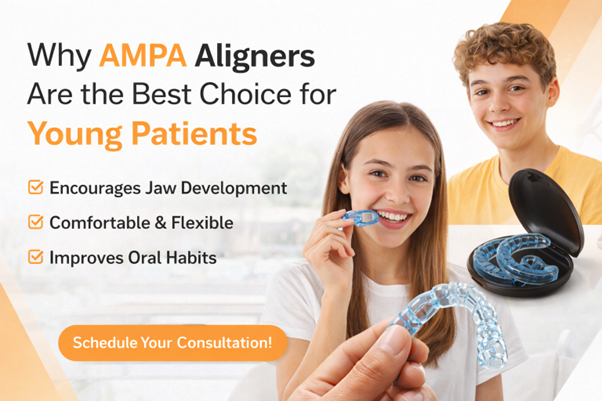
Orthodontic treatment for children and teenagers has traditionally meant metal braces, adjustment appointments, and dietary restrictions. AMPA (Advanced Myofunctional Pre-Aligner) aligners represent a different approach altogether. These specialized aligners work with a child’s natural growth patterns rather than just moving teeth, addressing underlying developmental issues that often cause orthodontic problems in the first place.
Dr. Pravin Shetty at B.Braced Exclusive Centre for Orthodontics has seen firsthand how AMPA aligners change outcomes for young patients. Unlike conventional aligners designed primarily for adults, AMPA technology specifically targets the developmental needs of growing children and teens, making early intervention both effective and comfortable.
Understanding AMPA Aligners
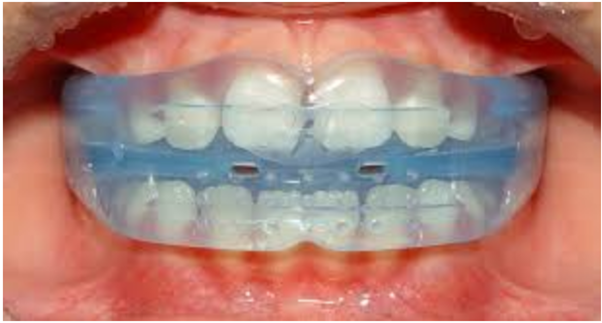
AMPA aligners differ fundamentally from standard clear aligners. While traditional aligners focus on moving crooked teeth into straight positions, AMPA aligners address the root causes of misalignment—poor jaw development, incorrect tongue posture, mouth breathing, and other myofunctional issues that affect how a child’s face and teeth develop.
The technology works on the principle that many orthodontic problems stem from inadequate jaw growth during childhood. Narrow dental arches, crowded teeth, and bite issues often result from underdeveloped jaws rather than teeth being inherently crooked. AMPA aligners gently guide jaw expansion while simultaneously training proper oral muscle function.
This dual approach means children often avoid more invasive treatments later. By intervening early—typically between ages 6-11—AMPA aligners can influence growth in ways that become impossible once a child reaches their teenage years and growth plates close.
Dr. Shetty uses advanced 3D imaging to assess each child’s specific developmental needs. The scans reveal not just current tooth positions but also jaw relationships, airway dimensions, and growth potential. This comprehensive assessment allows for treatment planning that considers the child’s entire facial development, not just dental alignment.
How AMPA Aligners Support Healthy Growth and Development in Children and Teens
The growth-guided approach of AMPA aligners addresses several interconnected issues. Many children develop narrow upper jaws, which restricts nasal breathing and forces mouth breathing. This habit affects facial development, sleep quality, and overall health. AMPA aligners gradually expand the upper jaw, creating space for proper nasal breathing.
Improved breathing patterns influence more than just orthodontics. Children who breathe properly through their noses sleep better, concentrate more effectively in school, and experience fewer respiratory issues. Parents often report that their kids seem more alert and focused after starting AMPA treatment, even before seeing significant tooth movement.
The aligners also work on tongue positioning. Many children develop habits of resting their tongues incorrectly, which affects swallowing patterns and jaw development. AMPA aligners incorporate design features that encourage proper tongue posture, retraining these muscles over time. This retraining prevents relapse after treatment and supports long-term stability.
For teenagers going through growth spurts, AMPA aligners can still provide benefits, though the optimal window is earlier. Teen patients often see improvements in facial profile and jaw balance as the aligners guide remaining growth in positive directions.
The Advantages of AMPA Aligners Over Traditional Braces for Young Patients
Parents weighing orthodontic options for their children often ask how AMPA aligners compare to traditional braces. The differences matter, particularly for younger patients:
No dietary restrictions -
Children can remove aligners before meals and eat normally, eliminating the frustration of forbidden foods that come with braces
Better oral hygiene -
Removable aligners mean kids can brush and floss normally, reducing cavity risk during treatment years
Fewer emergency visits -
Broken brackets and poking wires don't happen with aligners, saving parents from unexpected orthodontist trips
Less discomfort -
AMPA aligners apply gentle, consistent pressure without the soreness that often follows braces adjustments
Addresses root causes -
Rather than just straightening teeth, AMPA aligners improve jaw development and oral function, preventing future problems
Nearly invisible -
Young patients avoid the self-consciousness that can come with visible braces during formative social years
Fewer office visits -
Treatment progress requires less frequent in-person appointments compared to monthly braces adjustments
How AMPA Aligners Offer Flexibility and Comfort for Active Kids
Children lead active lives—sports, music lessons, playdates, school activities. AMPA aligners accommodate this reality better than fixed braces. A child playing contact sports can remove aligners and wear a proper mouthguard, providing better protection than braces allow. Young musicians playing wind instruments find aligners less interfering than brackets and wires.
The comfort factor shouldn’t be underestimated. Traditional braces can irritate cheeks and lips, particularly after adjustments. AMPA aligners have smooth edges and apply gradual pressure, reducing overall discomfort. Most children adjust within days and barely notice they’re wearing them.
Parents appreciate the flexibility too. If a child has school pictures, a special event, or an important presentation, the aligners can come out temporarily without derailing treatment. This flexibility reduces conflicts and power struggles around orthodontic care.
The recommended wear time is 14-18 hours daily for AMPA aligners, less than the 20-22 hours required for adult aligners. This acknowledges that children need more leeway while still achieving effective results. Dr. Shetty works with families to establish routines that make compliance realistic rather than burdensome.
The Role of AMPA Aligners in Preventing Future Orthodontic Issues
Early intervention with AMPA aligners often prevents problems that would otherwise require extensive treatment in teenage years. A child with a narrow upper jaw and crowding might need tooth extractions and full braces as a teen if left untreated. AMPA treatment at age 8 can expand the jaw, create adequate space, and eliminate the need for extractions later.
The myofunctional component—retraining tongue position and breathing patterns—has lasting effects. Children who develop proper oral habits during AMPA treatment maintain those patterns, which helps keep teeth stable after treatment ends. Without addressing these functional issues, orthodontic results often relapse over time.
Dr. Shetty regularly sees cases where early AMPA treatment either eliminates the need for later braces entirely or reduces future treatment to minor refinements rather than comprehensive orthodontics. From both a health and financial perspective, this preventive approach makes sense for many families.
The airway benefits deserve particular attention. Children with restricted airways may develop sleep-disordered breathing, which affects development, behavior, and learning. AMPA aligners that expand the upper jaw simultaneously enlarge nasal passages and improve breathing. Parents sometimes notice their children stop snoring or sleep more soundly during AMPA treatment—signs of better airway function.
The Treatment Process: How AMPA Aligners Work for Growing Patients
The AMPA treatment journey at B.Braced starts with a comprehensive evaluation. Dr. Shetty examines not just teeth but jaw relationships, facial proportions, breathing patterns, and oral habits. This assessment often includes questions about sleep quality, concentration issues, and mouth breathing—factors parents might not realize connect to orthodontics.
Digital scans create a 3D model of the child’s mouth and jaws. Using this model, Dr. Shetty maps out a treatment plan that shows parents exactly how their child’s dental arches will develop over time. Seeing this visual roadmap helps families understand what AMPA treatment will accomplish.
Once treatment begins, children receive their aligner sets along with clear instructions. The aligners typically change every 2-3 weeks as teeth and jaws gradually shift. Check-in appointments happen every 6-8 weeks, where Dr. Shetty monitors progress and ensures development is tracking as planned.
Treatment duration varies based on the child’s age and specific needs. Most AMPA cases run 12-18 months, though some finish sooner and others require longer. The key is that treatment works with the child’s natural growth timeline rather than fighting against it.
Parents play an important role in AMPA treatment success. Helping younger children remember to wear aligners, reinforcing good habits, and attending appointments all contribute to outcomes. Dr. Shetty provides families with strategies for building aligner wear into daily routines so it becomes automatic rather than a constant reminder.
Why Dr. Pravin Shetty Recommends AMPA Aligners for Young Patients
After years of treating young patients, Dr. Shetty has seen AMPA aligners deliver results that traditional orthodontics often can’t match. The ability to guide jaw growth and retrain oral function during critical developmental years changes long-term outcomes in meaningful ways.
The science behind AMPA technology aligns with current understanding of craniofacial development. Research increasingly shows that many orthodontic and airway issues stem from underdeveloped jaws rather than genetics alone. AMPA aligners directly address this underlying problem.
Dr. Shetty particularly values how AMPA treatment sets children up for healthier lives beyond just straight teeth. Better breathing, improved sleep, and proper oral function contribute to overall wellbeing in ways that extend far past orthodontics.
At B.Braced Exclusive Centre for Orthodontics, the focus remains on providing young patients with treatment that works for their specific needs and lifestyles. AMPA aligners represent an approach that respects children’s growth patterns, daily activities, and developmental timelines while delivering results that last.