

When it comes to orthodontic treatment, the two most common options are aligners and braces. As an experienced orthodontist, Dr. Pravin Shetty often helps his patients choose between these two treatments based on their unique dental needs, lifestyle, and preferences. Both options are designed to straighten teeth, improve bite alignment, and create a healthier smile. However, each comes with its own set of advantages and considerations.
In this blog, we’ll explore the key differences between aligners vs. braces, their benefits, and which might be the best option for you. Whether you’re deciding between braces vs. aligners cost or looking for the best aesthetic solution, this guide will help you make an informed decision on your orthodontic journey.
If you’re considering treatment but wondering if aligners are right for you, this guide will answer all your questions about how aligners work, their benefits, and why they can be a great option for adults over 50.
Key Differences: Aligners vs. Braces

Aligners are an effective treatment for adults over 50 looking to straighten their teeth or address bite issues. Although many people associate orthodontic treatment with teenagers, adults can benefit significantly from aligners like Smilealigners and Invisalign. These aligners are designed to gradually shift your teeth into the correct position, and their clear, removable design makes them ideal for adults who want a discreet option.
The treatment is personalized, ensuring that it addresses specific dental concerns such as misalignment, bite issues, or crowding. Plus, aligners are made from smooth plastic, making them more comfortable than traditional metal braces. Even at 50 or beyond, aligners can help you achieve a more beautiful, healthier smile.
Advantages of Aligners
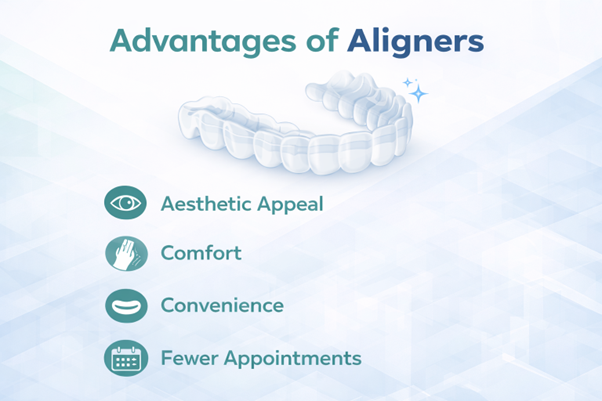
There are several advantages to choosing clear aligners vs. braces, especially for adults and those concerned with the appearance of metal braces
1. Aesthetic Appeal
Aligners are nearly invisible, making them an ideal option for those who want to straighten their teeth discreetly. Whether you're at work, in social settings, or in photographs, aligners are much less noticeable than traditional braces.
2. Comfort
Aligners are made of smooth plastic, which reduces the likelihood of irritation to the gums and mouth. Unlike traditional braces, which can cause discomfort due to the metal brackets and wires, aligners are generally more comfortable for the wearer.
3. Convenience:
Aligners are removable, allowing you to take them out when eating, drinking, or brushing your teeth. This makes it easier to maintain good oral hygiene compared to traditional braces, where food can often get stuck in the wires and brackets.
4. Fewer Appointments
With aligners, you’ll need fewer visits to the orthodontist. Once your aligners are provided, you’ll typically visit your orthodontist every 6-8 weeks to monitor progress.
Advantages of Braces
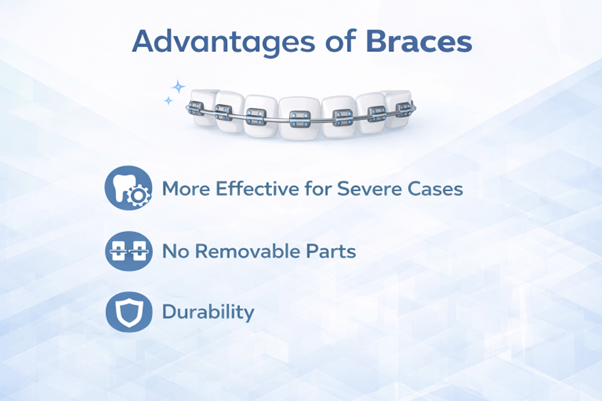
While braces vs. aligners might seem like a straightforward comparison, traditional braces still have their own set of benefits, especially for complex dental cases.
1. More Effective for Severe Cases
Aligners like Smilealigners and Invisalign are made from smooth plastic, which means they are far more comfortable than traditional braces that use metal wires and brackets. Additionally, because they are removable, aligners give you the flexibility to eat your favorite foods, brush and floss your teeth with ease, and remove them when necessary.
2. No Removable Parts
Braces are fixed, meaning you don’t need to worry about taking them out. This is particularly beneficial for patients who might be concerned about losing or forgetting to wear their aligners, which can delay treatment progress.
3. Durability
Braces are very durable and less likely to get damaged or misplaced, unlike aligners, which need to be carefully handled and may become damaged if not taken care of properly.
Which Option is Right for You?
Choosing between braces vs. aligners depends on several factors, including your age, the severity of your dental issues, lifestyle, and aesthetic preferences.
If you have a complex dental issue, such as large gaps, severely misaligned teeth, or bite problems, traditional braces may be the better choice. Braces are often more effective for cases that require extensive tooth movement.
If you prefer a more aesthetic solution and have a relatively mild case, clear aligners might be the right fit. They’re ideal for those who want a discreet treatment option that fits easily into their daily lives.
Consulting with an experienced orthodontist like Dr. Pravin Shetty is key to determining which option will provide the best results based on your specific needs.
Cost Comparison: Aligners vs. Braces
When considering braces vs. aligners cost, it’s essential to note that the cost of treatment can vary depending on several factors, such as the complexity of your case, the length of treatment, and the type of braces or aligners you choose.
It’s important to keep in mind that some dental clinics offer financing options or payment plans to help manage the cost of treatment. Your orthodontist can provide a detailed cost estimate after evaluating your case.
Treatment Time: How Long Will It Take?
The length of time required for treatment depends on your specific dental needs. On average, treatment with braces can take anywhere from 18 months to 3 years, depending on the severity of the issue. Aligners typically require a shorter treatment time, with most patients completing treatment in about 12 to 18 months.
However, it’s essential to follow your orthodontist’s guidelines to ensure that your treatment progresses as planned. For aligners, this means wearing them for the recommended 20-22 hours per day.
Aftercare: Retainers & Maintenance
After completing your treatment, whether with braces vs. aligners, it’s crucial to wear a retainer to maintain the results. Retainers help prevent your teeth from shifting back into their original position. Both braces and aligner patients will typically need to wear a retainer for a period after their treatment is completed, and some may require long-term use, particularly during sleep.
Proper aftercare is essential to ensure that the results achieved with your braces or aligners are long-lasting.
Conclusion
Deciding between aligners vs. braces is a personal decision that depends on your unique dental needs and preferences. While clear aligners vs. braces may be a more visible, comfortable, and convenient option for some, traditional braces still hold their place as a reliable solution for more complex cases. With the right guidance from Dr. Pravin Shetty, you can make an informed choice that leads to a healthier, more confident smile.
If you’re considering braces vs. aligners cost and want to explore your options, schedule a consultation with Dr. Pravin Shetty today to discuss the best treatment plan for your needs.
